
Building a Fall Apothecary: Goldenrod Honey Syrup

Hey girl, if fall brings sneezing, watery eyes, a runny nose, or stuffy sinuses, goldenrod may be an herb worth adding to your family apothecary.
Goldenrod blooms during late summer and fall. Because it often grows near ragweed, it is frequently blamed for seasonal allergies. However, ragweed’s lightweight pollen is usually the real airborne troublemaker. Goldenrod pollen is heavier and is primarily carried by insects.
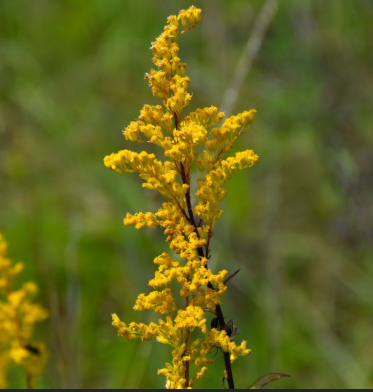
Goldenrod (Solidago)
Goldenrod has traditionally been used to support the upper respiratory system when seasonal irritation causes:
Frequent sneezing
Watery eyes
A runny or stuffy nose
Excess mucus
Sinus discomfort
It is especially suited for wet, drippy seasonal symptoms. One practical way to keep it in the fall apothecary is by preparing a goldenrod honey syrup.
Goldenrod Honey Syrup
This is better described as a seasonal sniffle and throat syrup than a traditional cough syrup. Goldenrod supports mucus-heavy upper-respiratory symptoms, while honey provides soothing comfort for an irritated throat.
Ingredients
½ cup dried goldenrod flowers and leaves
2 cups hot water
Honey
1 tablespoon lemon juice, optional
Directions
Place the dried goldenrod in a heat-safe jar.
Pour the just-boiled water over the herb.
Cover and allow it to steep for 30–45 minutes.
Strain the infusion thoroughly, pressing the herbs to remove as much liquid as possible.
Measure the amount of strained infusion.
While the infusion is still warm—not boiling—add an equal amount of honey.
Stir until the honey dissolves completely.
Add the optional lemon juice.
Pour the syrup into a clean, labeled glass bottle or jar.
Storage
Keep the syrup refrigerated and always use a clean, dry spoon. Make it in small batches and use it within approximately two to four weeks.
Discard the syrup if you notice mold, bubbling, an unusual odor, or a significant change in its appearance.
A Quick Herbal Note
Goldenrod belongs to the Asteraceae plant family. Anyone sensitive to ragweed, daisies, or chrysanthemums may also react to goldenrod.
Consult a healthcare professional before giving herbal preparations to young children or using goldenrod during pregnancy, while nursing, with kidney or heart conditions, or while taking diuretics or other medications.
Never give honey to a child younger than 12 months. Difficulty breathing, facial swelling, throat tightness, or a severe or persistent cough requires medical attention.
Goldenrod reminds us that sometimes the plant growing quietly beside the problem may also offer seasonal support. Turning it into a simple honey syrup makes it a beautiful and practical addition to the fall apothecary.
