
Pokeweed: An Herb That Requires Knowledge, Not Curiosity Alone

Hey girl hey.
Now today’s herb conversation, this one right here— comes with a little caution.
Because every herb is not lavender.
Every herb is not chamomile.
And every plant growing outside is not meant to be casually picked up and turned into tea because somebody on social media said it was “natural.”
Today we’re talking about pokeweed.
And baby…this is one of those herbs that reminds us that plant medicine deserves respect.
Pokeweed has a long history in Southern folk traditions, especially within Appalachian and Southern Black communities where people relied heavily on the land for food and medicine. You may have heard older generations talk about “poke sallet” or “poke salad,” which was traditionally made from very young pokeweed shoots that were carefully prepared through repeated boiling.
But let me say this clearly:
pokeweed is NOT an herb for beginners.
The mature plant — especially the roots and berries — can be toxic if improperly used.
So while pokeweed has historical significance and traditional uses, it is not something to casually experiment with at home.
Because we’re practicing herbalism, not chaos.
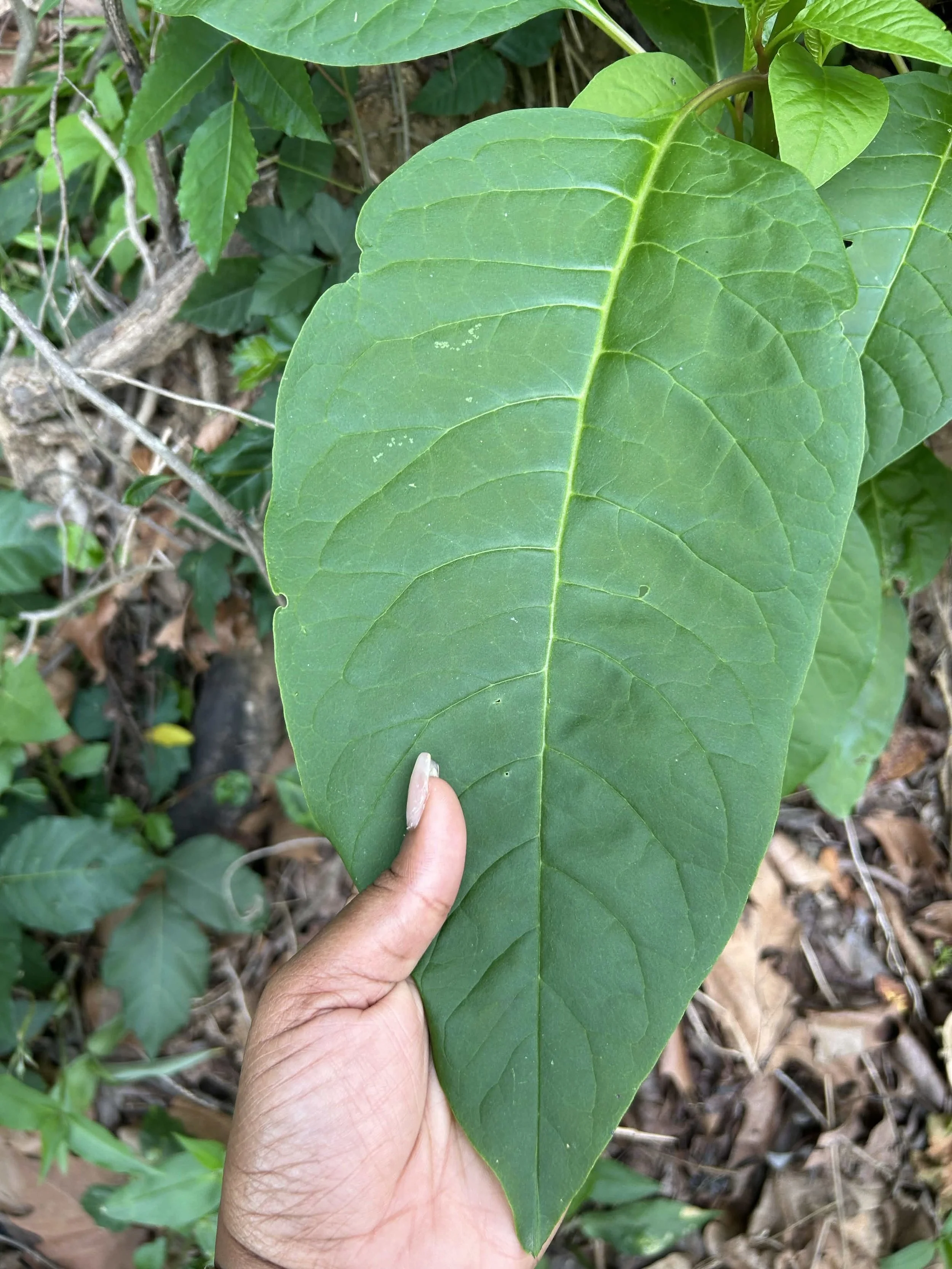
Pokeweed Phytolacca americana
was used in folk traditions for:
Lymphatic stagnation
Swollen glands
Joint discomfort
External poultices
Traditional spring cleansing
Rural food traditions
Many folk herbalists considered pokeweed a powerful plant for moving stagnation.
But powerful herbs require wisdom.
Let’s Talk About the Safety Part
This is important.
Improper use of pokeweed can cause:
Nausea
Vomiting
Severe digestive distress
Diarrhea
Serious illness
The roots, mature leaves, and berries are considered the most toxic parts of the plant.
Children and pregnant individuals should avoid pokeweed entirely.
Honestly?
This herb is a beautiful example of why ancestral knowledge matters so much in herbal traditions. People who traditionally worked with pokeweed understood preparation methods, seasonal harvesting, dosage, and caution.
That kind of wisdom matters.
Traditional Ways Pokeweed Was Used
Poke Sallet
Traditionally:
Very young shoots were harvested in spring
Boiled multiple times
Water discarded between boils
Then cooked as food
Again…
this was a traditional preparation rooted in generational knowledge.
External Preparations
Historically, pokeweed was sometimes used externally in poultices or oils for swollen or congested areas.
Folk Herbal Preparations
Some experienced herbalists historically used extremely small-dose preparations for lymphatic support.
Keyword:
Experienced. Not TikTok University graduates uhum (side eye)-- I hope you heard me!!!
Pokeweed reminds us that herbs deserve reverence.
Not everything natural is automatically safe.
Not every plant is gentle.
And sometimes the most responsible thing we can do is learn from a plant instead of rushing to consume it.
So hey girl…study the herbs.
Respect the plants.
Honor the ancestral wisdom behind them.
And remember that good herbalism is rooted in both curiosity and caution.
