
Comfrey: The Herb That Teaches You To Give it Respect
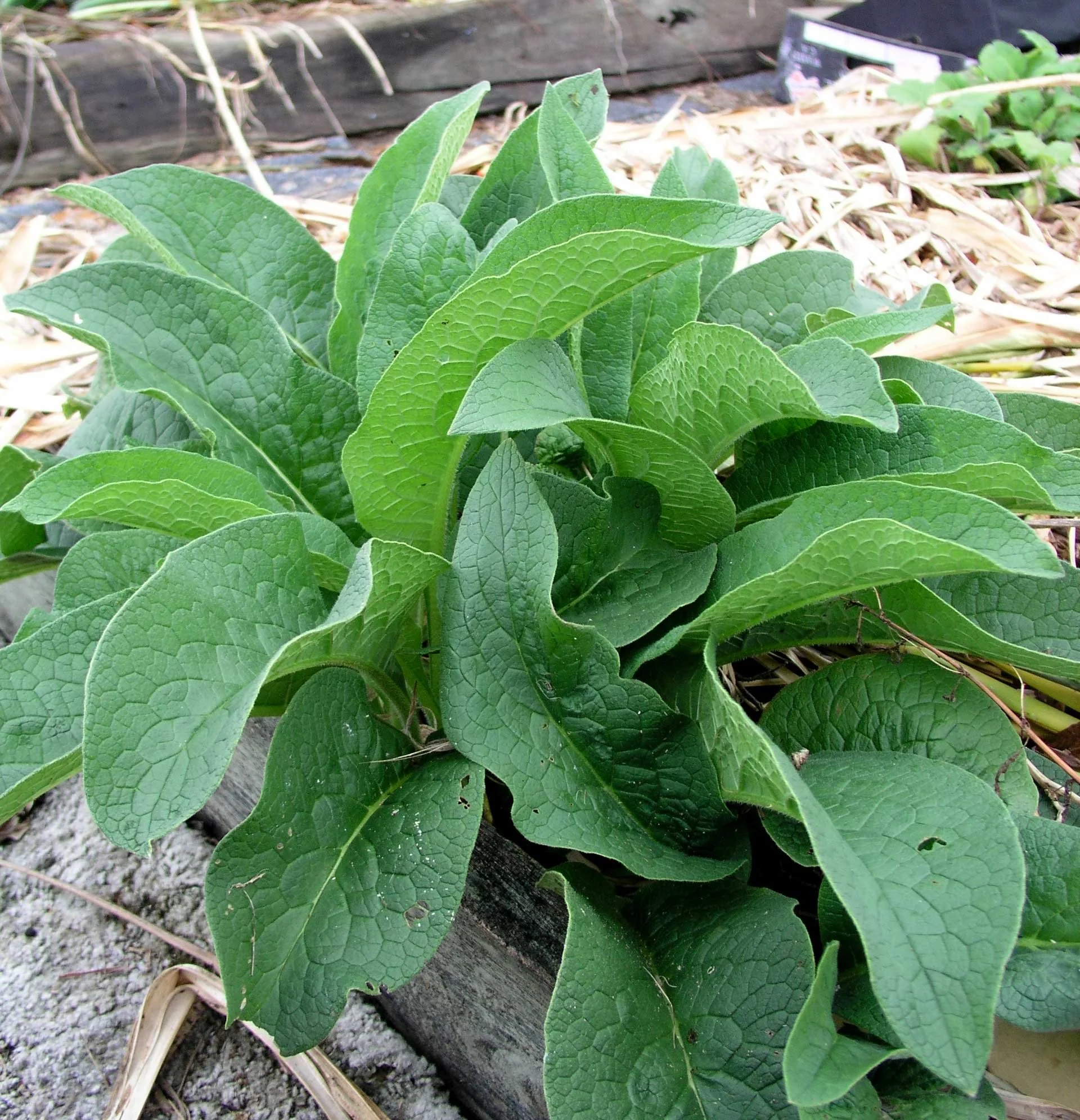
After attending the Build Your Apothecary class, I found myself really taking a look at all of the herbs I’ve been collecting.
Yes, when I say collecting that’s exactly what I mean. I have a whole pantry full of herbs.
Friend, now don’t talk about me, but I purchased quite a few herbs well before I knew any of their benefits.
So I will stop buying and storing herbs for now but after that class I have been assessing and leaning in on the benefits the herbs have to offer and I made it a point to do a complete assessment of my herb collection.
My first step was to review:
What Herb(s) do I have?
What do I know about them?
What is the Herb used for?
What can I make with them
And as I’ve been going through my apothecary, I was drawn to one herb.
And that Herb is “Comfrey”
Comfrey, has come up multiple times in recent conversations, in class, and in passing but something about Comfrey, made me pause and sit with it a little longer.S o I decided to take my time, connect with it, and learn it more deeply.
As I’m starting this herbalism journey, I’m realizing something… every herb has its own personality.
Some are gentle.
Some are strong.
And some, like comfrey, will make you slow down and really pay attention
Traditionally, comfrey has been used to support things like bruises, sprains, and skin healing. It’s often called “knitbone” because of how it’s been used to support the body in repairing itself.
Comfrey is also a reminder that just because something is natural… doesn’t mean we use it any kind of way.
This is one of those herbs that teaches respect. It’s most commonly used externally in things like oils, salves, and poultices to support the skin and muscles. But it’s not typically recommended to be used internally in modern herbal practice because of how strong it is.
As a beginner, it’s teaching me that herbalism isn’t just about what herbs can do — it’s about how we use them, when we use them, and how we honor their strength.
What I’m Learning About Comfrey
It’s a plant that supports repair.
It shows up when something needs to come back together.
It works close to the surface such as on the skin, the muscles or the places that need care.
Not every herb is for everything and not every herb is meant to be used casual; some require intention.
If you’re just starting out, one of the simplest ways to work with comfrey is externally.
You can find this herb in comfrey-infused oils, salves, or balms
Via balms, comfrey can be used to support dry skin, minor bruises, or areas that need extra care.
I think what I’m learning most right now is that herbalism isn’t just about collecting herbs.
It’s about building a relationship.
Understanding what each plant offers.
Respecting its boundaries.
And learning, little by little, how to work with it in a way that feels aligned.
And comfrey?
Yeah… she’s definitely one of those herbs that will make you slow down and listen.
I have more herbs to discuss and tell you about so stay tuned, friend!
