Learning From The Trees
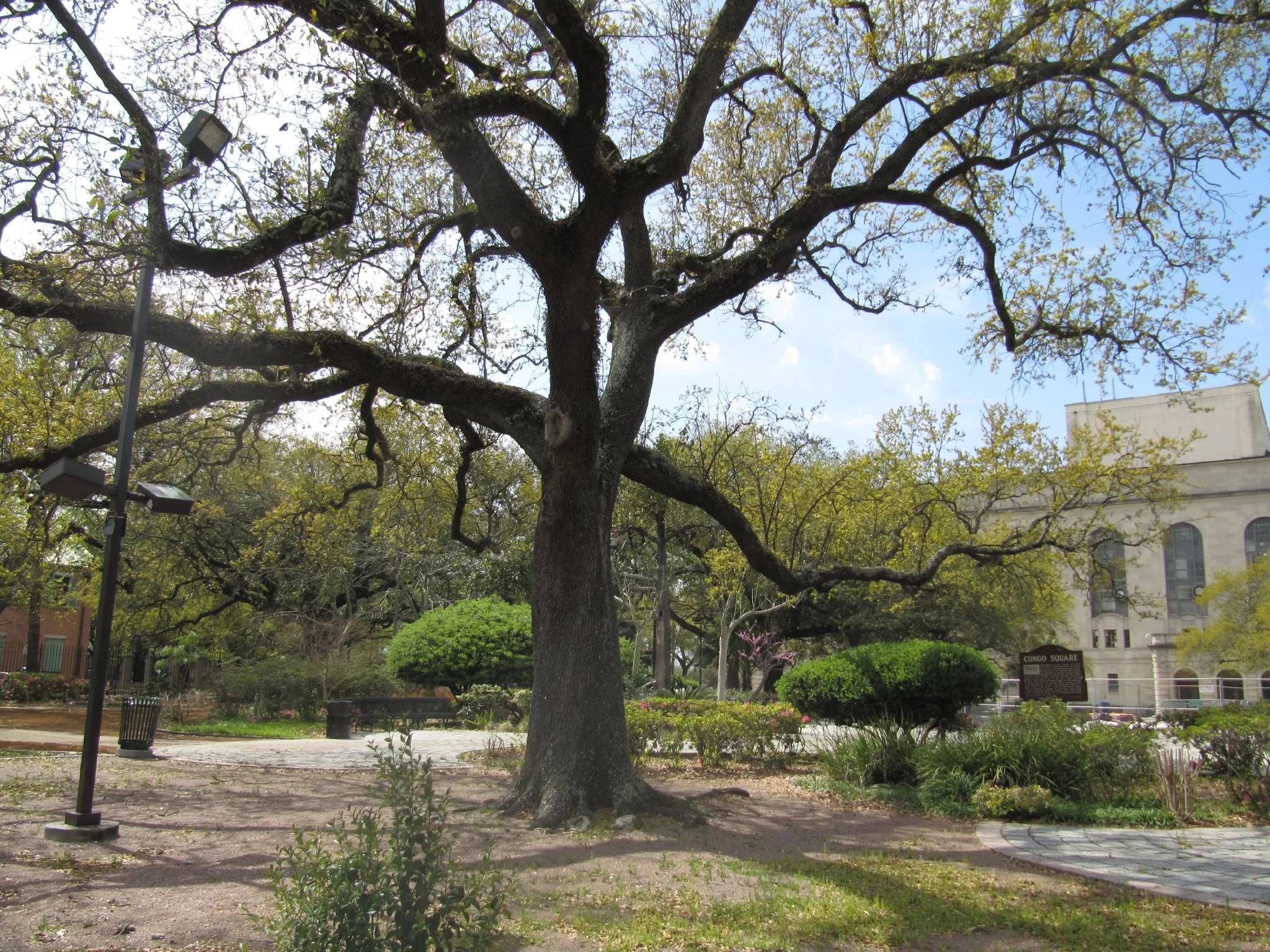
The prominent tree in Congo Square, located within Louis Armstrong Park in New Orleans, is a historic Southern Live Oak (Quercus virginiana). Often referred to as the "Ancestor Tree" or "Eggun Tree,
Hey girl hey,
There’s something about trees that invites us to slow down.
Maybe it’s their stillness.
Maybe it’s their size.
Or maybe it’s the quiet way they exist rooted, present, and unmoved by urgency.
During Earth Week, we’re often reminded to look at the ground beneath us.
But today, I invite you to look up.
To the trees.
Because in herbalism, trees are not just part of the landscape they are teachers, protectors, and medicine.
Trees live differently than we do. They don’t rush growth, they don’t force change, and they don’t move when things feel uncertain.
Instead, they:
root deeper
adapt to their environment
continue growing (slowly, steadily, over time)
And that alone is a lesson, in a world that often encourages speed, trees remind us that: growth can be slow and still be powerful.
In herbalism, different parts of the tree are used to support the body:
Bark → structure, strength, and support
Leaves → gentle, daily nourishment
Resin → protection and preservation
Berries → nourishment and seasonal support
Some familiar examples include:
Willow → traditionally used for discomfort and pain support
Pine → supports the respiratory system
Elder → supports the immune system
Each tree carries its own rhythm and offering.
And just like roots and herbs, their medicine is not rushed.
Today, spend a few moments with a tree if you can.
Stand near it
Sit beneath it
Notice its texture, its shape, its presence
You don’t need to do anything spectacular, I only want you just observe. Because trees don’t ask for attention. They simply stand tall
season after season, year after year, offering shade, air, and quiet support.
This Earth Day, let the trees remind you:
You don’t have to rush.
You don’t have to force growth.
You can root.
You can breathe.
You can take your time.
And still become.
