
Violet: The Softest Herb in the Yard
Hey girl hey,
Have you ever bent down to pick a tiny purple flower from your yard?
Not the flowers planted in a garden bed.
Not the flowers someone bought from a nursery.
I’m talking about those little purple blooms that seem to appear overnight in the grass.
The ones most people mow right over.
That’s Violet.
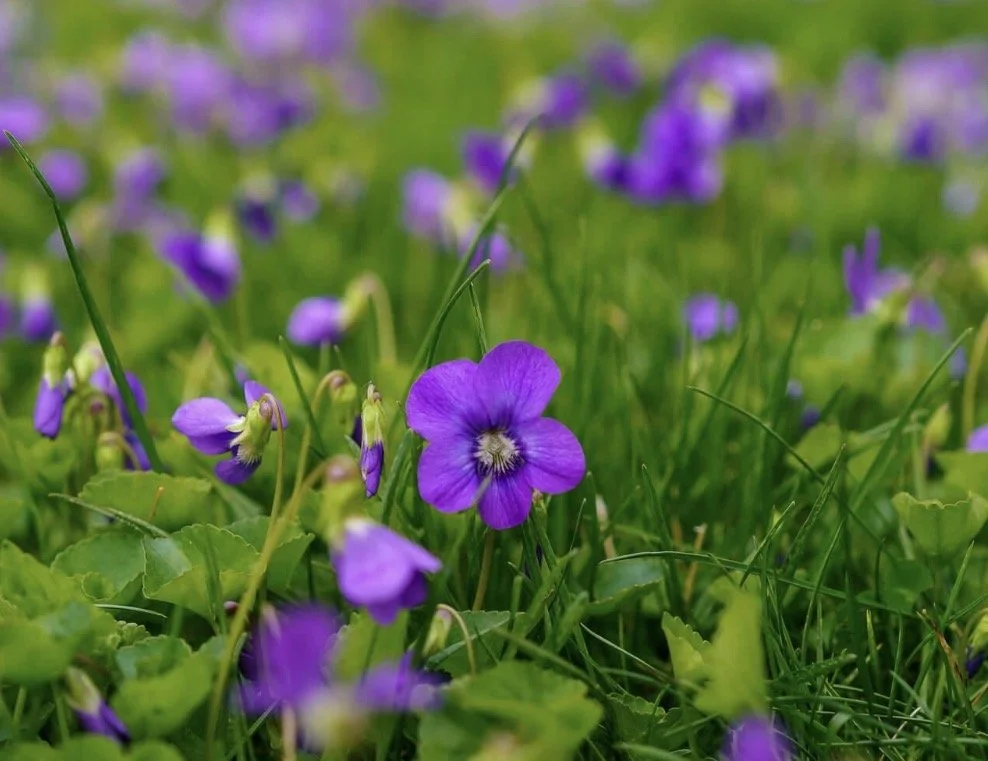
Violet “Viola” (Violaceae)
Unlike Henbit, which often creates a purple carpet, Violet tends to grow in clusters or patches.
Look for:
Heart-shaped leaves
Purple, blue-violet, or sometimes white flowers
Low-growing habit
Moist lawns, shady yards, woodland edges, and garden beds
Why Herbalists Love Violet
Violet is one of those herbs that feels gentle in every way.
Traditionally, herbalists have used violet for:
Lymphatic support
Skin support
Respiratory wellness
Soothing dry tissues
General nourishment
The leaves contain mucilage, which gives them moistening and soothing qualities.
Many herbalists think of violet as a plant for:
Dryness
Stagnation
Tenderness
Softening
Ways People Traditionally Use Violet
Tea
Both leaves and flowers can be infused into tea.
Syrups
Violet flower syrup is famous for its beautiful color.
Salves and Oils
The leaves are often infused into oils for topical preparations.
Vinegars
Many herbalists enjoy making violet-infused vinegars in the spring.
Salads
The flowers and young leaves are edible and beautiful in salads.
The Lesson Violet Teaches
If Henbit teaches us to pay attention and White Clover teaches abundance, I think Violet teaches gentleness.
Violet doesn’t dominate the landscape. It doesn’t tower over other plants.
It grows close to the earth.
Quietly.
Softly.
Yet herbalists have cherished it for centuries.
That’s a powerful lesson in a world that often tells us we must be loud to be valuable.
